

Samuel Guruswamy

My AI Training




Mary House
Organization Facts
Mary House provides safe, affordable housing and comprehensive support services for low income immigrant and refugee families throughout the Washington, DC region.
For more than 45 years, the organization has helped families build stable lives through housing, education, food assistance, and personalized advocacy.
Its mission is to open doors for immigrant and refugee families by creating welcoming communities where they can thrive with dignity and independence.
By combining long term housing with holistic family support, Mary House empowers families to overcome barriers and establish lasting roots in their communities.

Mary House
About the Organization
Mary House is dedicated to supporting immigrant and refugee families by providing affordable housing and comprehensive services that foster long term stability and self sufficiency.
Through dedicated Family Advocates, educational support, food assistance, and community resources, the organization helps families navigate the challenges of resettlement while building strong foundations for future success.
By promoting housing stability, educational opportunity, and community integration, Mary House empowers families to achieve independence while strengthening the neighborhoods they call home.

Mary House
Community Involvement
Mary House's staff, Family Advocates, volunteers, and community supporters work closely with immigrant and refugee families to provide housing, educational services, food assistance, and individualized support.
The organization partners with healthcare providers, schools, housing organizations, faith communities, and nonprofit organizations to expand access to essential resources and opportunities.
Key partners such as Children's National Medical Center, Mary's Center, Enterprise Community Partners, and the Community Foundation for the National Capital Region help strengthen housing stability and family wellbeing throughout the Washington metropolitan area.

Mary House
Funding Source
Mary House is funded through individual donations, businesses, faith communities, charitable foundations, and community giving campaigns that support its mission of serving immigrant and refugee families.
The organization operates entirely without federal funding and relies on financial contributions, in kind donations, volunteer support, and private philanthropy to sustain its housing and family programs.
Funding is used to maintain affordable housing, provide food assistance, support Family Advocates, expand educational opportunities, and ensure families receive the resources needed to build stable and independent lives.

My AI Proposal
Throughout the AI & Business Strategy Internship, I worked closely with Mary House to understand its business model, goals, current operations, and opportunities for growth. Alongside Dr. Daniel Spar, I learned the fundamentals of artificial intelligence and explored how emerging AI technologies can be strategically applied to address real-world business challenges, including marketing, supply chain, management, logistical planning, and more.
Throughout the week, my team approached Mary House as business consultants, analyzing its existing processes, identifying operational vulnerabilities, and evaluating areas where artificial intelligence could create meaningful value. We considered the organization’s specific needs and researched potential AI applications that could improve efficiency, strengthen operations, support customers, and contribute to long-term growth.
Using our research and analysis, my team developed a comprehensive AI business proposal tailored specifically to Mary House. Our recommendations outlined practical strategies for integrating artificial intelligence into the organization while considering implementation, potential risks, and legal frameworks. The final proposal, shown alongside this description, represents the culmination of our week-long consulting process and demonstrates how AI can be applied strategically to solve real business challenges.

My AI Proposal Presentation
During the AI & Business Strategy Internship, I worked with Dr. Daniel Spar to learn about the basics of artificial intelligence and the potential business applications it possesses.
Throughout the week, I worked with an organization named Mary House to develop AI solutions to support their business growth and operations. I worked with my team to analyze the opportunities for growth as well as their current vulnerabilities.
At the end of the week, I presented my AI proposal to Dr. Spar and the LI Grant Committee, and I received grant money to implement the solution.
Internship Highlights
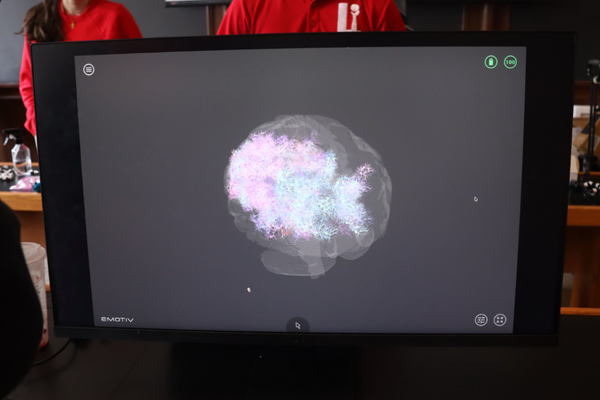
During my internship, I participated in a series of hands-on labs that allowed me to apply advanced AI tools and techniques to develop solutions aimed at optimizing business strategy, customer service, and cybersecurity.
These labs were designed to replicate real-world scenarios, enabling me to create applicable solutions to complex problems. Through this immersive experience, I fostered proficiencies in programming languages, communication tool creation, customer service segmentation, machine learning, supply chain management, and anomaly detection.
Each session required attention to detail and the effective use of collaboration, critical thinking, and adaptability to learn in a fast-paced environment. This invaluable experience allowed me to translate theoretical knowledge into tangible solutions. This experience not only deepened my understanding of artificial intelligence but also reinforced my commitment to pursue this career path.

During my internship, I gained valuable insight into the world of AI consultation through lectures and discussions with Dr. Dan Spar of Deloitte. His expertise provided a comprehensive understanding of the applications of AI across industries to solve complex business challenges.
Dr. Spar outlined the consulting process, emphasizing the identification of client needs to design AI-driven solutions that improve efficiency, decision-making, and long-term strategy. We also explored real-world case studies where AI was implemented in operations, marketing, and cybersecurity, illuminating the impact consultation can make on organizational success.
Through these sessions, I not only deepened my knowledge of AI’s practical applications but also learned how consultants bridge the gap between technical capabilities and client goals. This experience strengthened my ability to think critically about technology in a professional context and sparked my interest in pursuing AI-driven problem-solving in future endeavors.

The increasing prevalence of artificial intelligence has led to concerns regarding the harm versus benefits of its applications. We received specific briefings and dedicated research time to outline the ethical and legal considerations for AI’s integration into business development and operations.
Participating in these advanced lectures and in-depth discussions highlighted concerns regarding the cost, human and environmental impacts, and regulatory challenges associated with AI’s integration into business practices.
We also learned that despite these challenges, AI has allowed us to optimize supply chain management, digital market forecasting, talent acquisition, and customer security. Understanding how AI can positively impact a business, and subsequently the people and communities it serves, has fortified my desire to improve AI’s capabilities and applications.

During my internship, I had the opportunity to apply my training in AI consulting by working directly with small business partners in Washington, D.C. Meeting with Mary House allowed me to gain a clear understanding of their goals, challenges, and long-term vision, giving me the chance to explore how artificial intelligence could provide meaningful solutions.
Working alongside their leadership, I developed tailored recommendations on how AI tools could streamline operations, improve decision-making, and enhance customer engagement. This included analyzing areas where automation could reduce inefficiencies, identifying opportunities for predictive analytics, and suggesting ways to incorporate AI-driven marketing strategies.
Through this hands-on consulting experience, I not only strengthened my ability to assess client needs and translate them into actionable strategies but also learned the importance of aligning AI solutions with each business’s unique context. By applying these skills, I was able to deliver practical recommendations that could support Mary House in reaching its goals and preparing for long-term success in an increasingly data-driven economy.