Kai Goradia

My Business Training


Abdulmalik Mahmood
Quick Facts
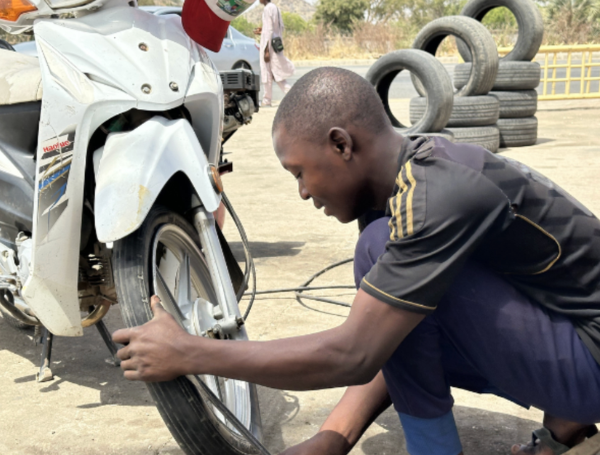
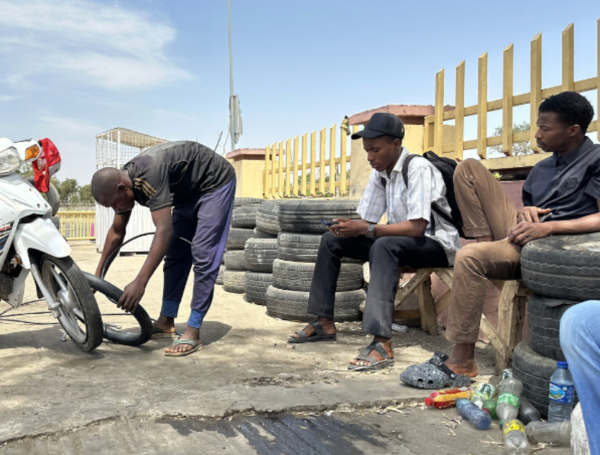
Abdulmalik Mahmood, affectionately nicknamed "Malika," is an enterprising 23-year-old vulcanizing technician from Bauchi.
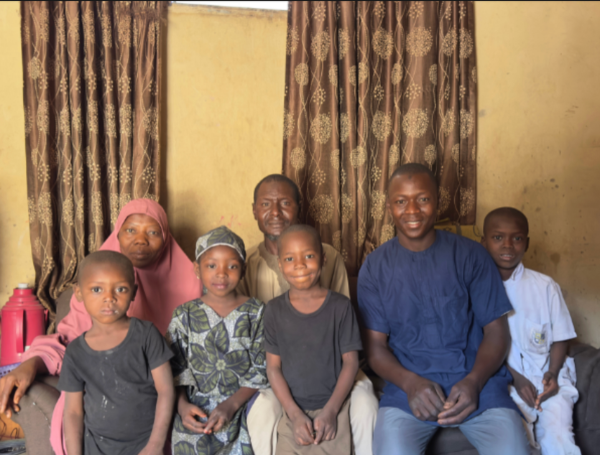
Raised in a crowded family compound, Abdulmalik learned the values of hard work and selflessness from his father, a dedicated vulcanizer.
As the eldest child, he carries a deep sense of responsibility for his family’s well-being, regularly contributing his income to buy household groceries and sponsor his younger siblings' school supplies.
After overcoming a thorough childhood apprenticeship, he successfully completed rigorous technical training under his uncle.
He is highly driven to establish his own commercial enterprise to lift his family out of poverty.

Abdulmalik Mahmood
Business Goals
Abdulmalik is aiming to launch his own independent mechanical service station named AK-Malik Wheel Balancing & Alignment.
Operating daily from 8:00 AM to 6:00 PM on a prominent main street, his business will provide specialized wheel balancing, precision alignments, tire inflation, and tube repairs, alongside retailing premium tires.
He targets private drivers, commercial motorcyclists, and long-distance travelers who prioritize vehicle safety and meticulous maintenance.
Serving roughly thirty-five motorists each week, Abdulmalik intends to utilize professional outdoor banners and an efficient, fast-paced service model to build a highly reliable automotive care brand modeled after Michelin.
Abdulmalik Mahmood
Business Obstacles
Abdulmalik consistently delivers precise and careful vehicle maintenance, but his commercial growth is severely restricted because he owns absolutely no tools or equipment of his own.
Currently operating out of a shared space inside a filling station, he relies entirely on borrowed gear to perform basic jobs.
His primary operational challenge is the lack of funding to purchase a heavy-duty air compressor, which forces him to turn away profitable commercial clients like heavy trailers and trucks.
Furthermore, balancing job-dependent pricing structures without any formal small-business financial management training prevents him from accurately tracking his business growth.
Abdulmalik Mahmood
Vulnerabilities
Abdulmalik is partnering with Leadership Initiatives to move out of his shared filling station workspace and build a fully independent automotive service center.
This strategic collaboration will supply his startup with essential modern machinery, including a heavy-duty air compressor, a digital wheel balancer, an air gauge, a professional vulcanizing toolbox, and vital seed capital.
By funding a spacious storefront on a main street, this initiative provides the secure parking and working area necessary to service multiple vehicles at once.
This critical support empowers Abdulmalik to expand his clientele, boost daily revenue, and support his family.
My Business Proposal
Throughout the program, we worked closely with Abdulmalik Mahmood to develop a clear understanding of their business goals. Though they have leveraged their skills and years of experience to create their business, they face obstacles hindering the expansion of their work.
Guided by their vision, we created a proposal detailing the infrastructure materials necessary to support the growth of their business. We devised a plan that would allow Abdulmalik Mahmood to optimize their business through a new financial tracking system.
This new budget enables Abdulmalik Mahmood to allocate funds toward essential materials and equipment, supporting the improvement of their services. Effective financial tracking will be crucial for managing increased revenue and preserving assets, ensuring the business’s long-term growth and stability.

My Business Proposal Presentation
As part of the International Leadership and Business Internship, I collaborated with top development experts to strengthen my business partner’s operation and finances.
At the conclusion of the program, my team presented our final proposal to a panel of judges from the Leadership Initiatives Grant Committee. This formal pitch allowed us to demonstrate our entrepreneurial skills, showcase our strategic plan, and advocate for meaningful change in our partner’s business.
Our team was awarded grant funding to support the implementation of our business partner’s plan, providing life-changing support that will expand operations, strengthen financial stability, and create new growth opportunities. Over the next year, this grant will help transform the future of their business and improve the quality of life for both the entrepreneur and their community.
Internship Highlights
- Business Partner Meeting
- Visit To The Embassy Of Mongolia
- Diplomacy Briefing At The Egyptian Embassy
- Professional Mentorship
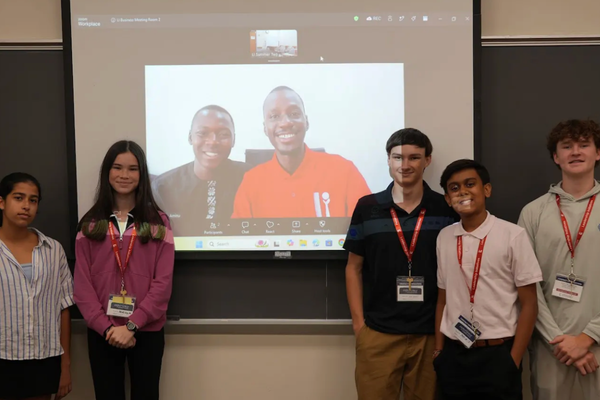
Our business development journey began with a one-on-one Zoom meeting with our partner, Abdulmalik Mahmood, and our Nigerian project coordinator. This initial conversation laid the foundation for strong collaboration. It allowed us to better understand our partner's background, family, goals for the business, and the specific challenges they were facing.
Hearing directly from Abdulmalik Mahmood provided the insight we needed to begin brainstorming practical, personalized solutions. Each morning, our team held focused discussions to refine our ideas, reflect on expert advice from the day before, and adjust our timeline to move our plans forward efficiently.
Throughout the process, on-staff project coordinators and business development experts offered guidance, helping us ask the right questions and turn our ideas into meaningful, actionable strategies.
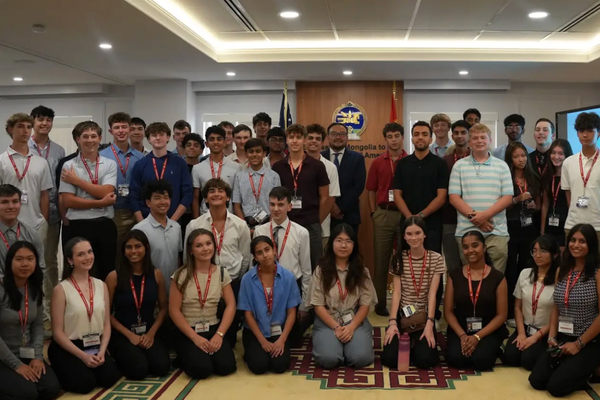
I had the unique opportunity to visit the Embassy of Mongolia, where I gained firsthand insight into the role of diplomacy in fostering strong relationships between Mongolia and the United States.
The embassy serves as a center for international collaboration, partnering with countries and global organizations to address pressing issues such as poverty, gender inequality, and climate change. Through this visit, I learned how diplomats engage in meaningful dialogue and policy development to create sustainable, people-focused solutions.
Officials from the Embassy of Mongolia shared how they collaborate with local communities to identify needs and implement programs that empower individuals and strengthen long-term development. This commitment to community-driven impact inspired my team and me as we worked to develop our own business proposal focused on creating lasting change.
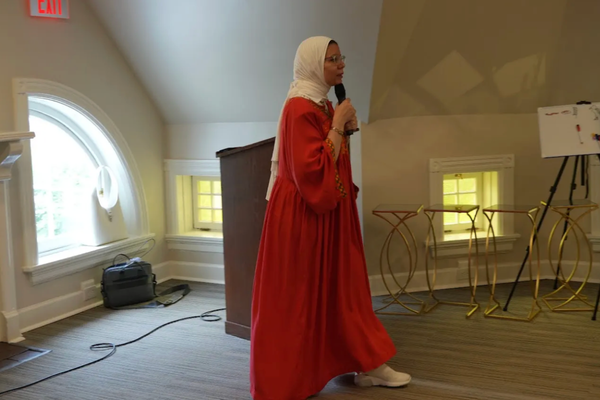
During my visit to the Egyptian Embassy, I gained insight into how diplomacy shapes international cooperation and development. The experience deepened my understanding of the embassy’s role in promoting peace, fostering economic partnerships, and addressing shared global challenges.
Embassy representatives discussed how their work supports cross-cultural exchange, advances policy priorities, and strengthens relationships between the Egyptian people and the United States. I learned how embassies serve as bridges, connecting governments, communities, and organizations to create innovative solutions for global issues.
This visit broadened my perspective on international leadership and inspired me to think critically about how collaboration, cultural awareness, and strategic planning can drive meaningful progress- principles that our team applied while developing our business proposal.
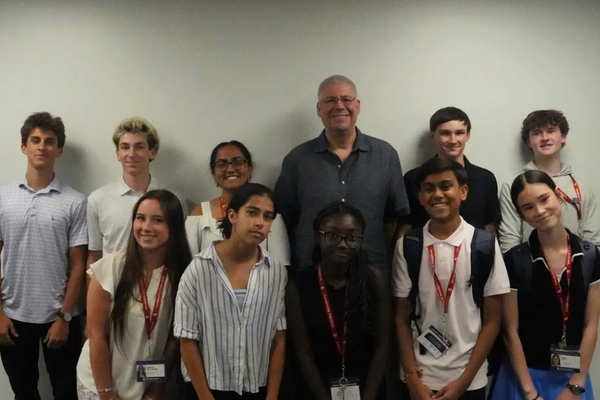
Throughout the internship, our team had the incredible opportunity to collaborate with leading experts in business and economic development from Johns Hopkins University, the U.S. State Department, and the U.S. Department of Commerce.
One of the highlights was a session with Carla Brooks, Business and Development Officer at the Johns Hopkins Center for Communication Programs.
My team also worked directly with a personal mentor. Our mentor provided us with career insights, project support, and feedback for our business ideas. The meetings we had throughout the week with our mentor provided critical insights from the initial business ideation phase through our project presentation.
With support from Ms. Brooks and other global leaders, including Eric Rosenstein, we refined our ideas, strengthened our strategy, and developed a powerful and polished pitch deck to present at the end of the week. Their guidance helped us take our business proposal to the next level, creating a plan designed not only to launch a venture, but to transform our business partner’s future.