

Benjamin Nguyen

My Cybersecurity Training




Immigrant and Refugee Outreach Center
Quick Facts
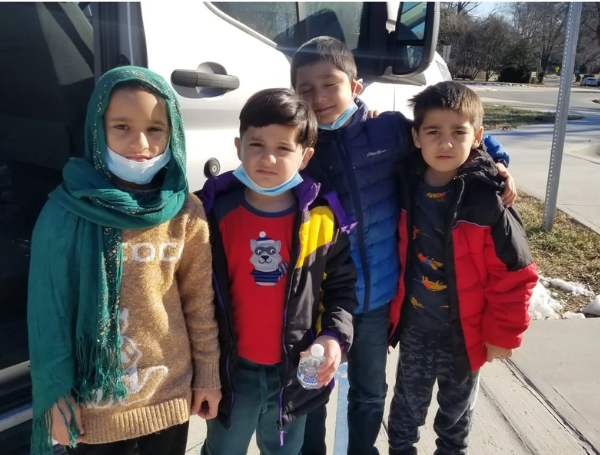
The Immigrant and Refugee Outreach Center (IROC) is a nonprofit organization dedicated to welcoming and supporting immigrant and refugee families throughout the Washington, DC, Maryland, and Virginia region.
Founded in 2019, the organization provides direct assistance, educational programs, and outreach services that help newcomers build stable and independent lives in the United States.
Its mission is to harness the power of community by delivering support, education, and outreach that empowers immigrant and refugee families.
By combining compassionate services with community partnerships, IROC helps newcomers overcome barriers while creating pathways toward long term success and self sufficiency.
Immigrant and Refugee Outreach Center
About the Organization
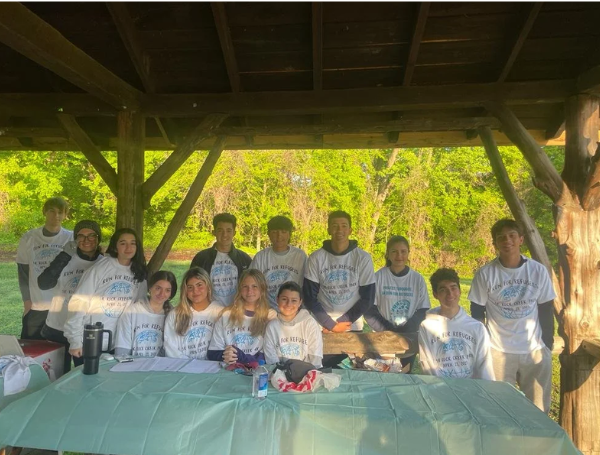
IROC is committed to helping immigrant and refugee families successfully navigate life in the United States by providing essential resources and personalized support throughout the resettlement process.
Through emergency financial assistance, English language scholarships, vocational training, household essentials, youth camps, and community education, the organization helps families achieve stability and independence. IROC also connects newcomers with additional community resources that address both immediate and long term needs.
By promoting self sufficiency, education, and community integration, the organization empowers immigrant and refugee families to build prosperous futures while strengthening the communities they call home.
Immigrant and Refugee Outreach Center
Community Involvement
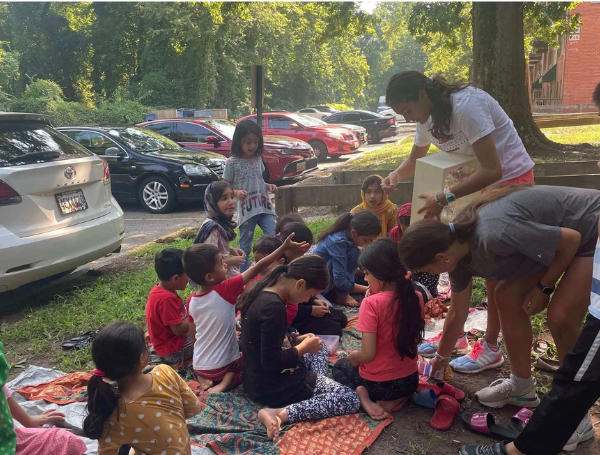
IROC works closely with volunteers, community sponsors, educators, and local organizations to provide direct support for immigrant and refugee families throughout the DMV region. The organization encourages community involvement through volunteer opportunities, family sponsorships, donation drives, and educational outreach initiatives.
The organization partners with schools, nonprofits, businesses, faith based organizations, and local service providers to expand access to housing, employment resources, education, and essential services. These collaborations strengthen opportunities for newcomer families as they establish new lives.
Through community partnerships and volunteer engagement, IROC continues to create welcoming environments that promote belonging, stability, and long term success for immigrant and refugee families.
Immigrant and Refugee Outreach Center
Sources of Funding
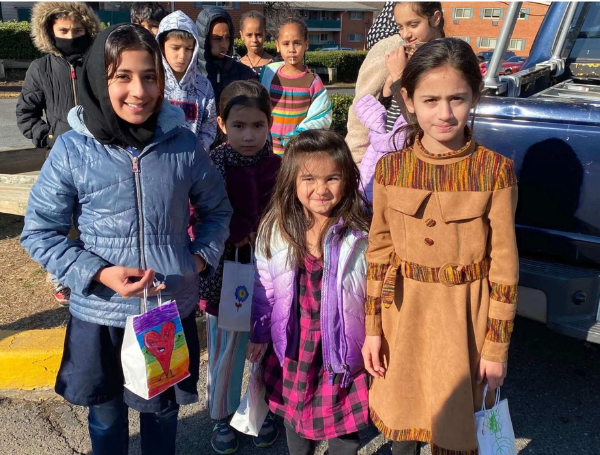
IROC is funded through individual donations, community fundraisers, corporate sponsorships, charitable contributions, and nonprofit partnerships that support its mission of serving immigrant and refugee families.
The organization also receives financial support from volunteers, businesses, community donors, and philanthropic partners who help expand emergency assistance, educational scholarships, and newcomer services.
Funding is used to provide emergency financial assistance, household essentials, English language and vocational scholarships, youth programs, and community outreach that helps families build successful lives in the United States.
My Security Presentation
During the Cybersecurity & Defense Internship, I worked with Beth Cerrone and Jamie Kreider to learn the basics of cybersecurity and explore its practical applications.
Throughout the week, I worked with a nonprofit to develop cybersecurity solutions to protect against various cyber threats. I worked with my team to analyze the threats to the organization and then developed a comprehensive solution.
At the conclusion of this internship, our team pitched the final proposal to the Leadership Initiatives Grant Committee, earning a microgrant to support the implementation of our proposal.

My Security Proposal Presentation
Throughout the program, we worked closely with the Immigrant & Refugee Outreach Center (IROC) to evaluate the cybersecurity infrastructure supporting its internal operations. Our analysis identified several existing strengths, including HTTPS-protected websites, Airtable, DonorPerfect for donations, volunteer background checks, and secure third-party donation services. However, the SWOT analysis also revealed weaknesses involving Google Drive, the absence of formal data-sharing policies, limited authentication, and exposure to phishing, malware, and politically motivated cyberattacks.
The most pressing internal issue is the absence of centralized access management, reliable data-recovery procedures, and consistent controls over sensitive organizational information. A compromised Google or Airtable account could expose refugee records, while accidental deletion could permanently disrupt essential services without adequate backups. IROC’s reliance on personal accounts and devices further limits leadership’s ability to monitor access, revoke credentials, and ensure confidential information remains within organizational systems.
To address these vulnerabilities, we proposed a phased cybersecurity strategy centered on centralized identity management, least-privilege access, automated backups, and incident response. IROC should transition employees and volunteers to Google Workspace for Nonprofits, enforce multi-factor authentication and stronger passwords, and integrate Airtable and Google Drive through centralized administrative controls. Automated Airtable snapshots and encrypted Google Drive backups should provide reliable data recovery, while a formal incident-response protocol would establish procedures for compromised accounts, phishing attacks, and accidental deletion. Finally, structured offboarding procedures should immediately revoke departing volunteers’ accounts, shared links, and internal communication access. Together, these measures will strengthen administrative oversight, improve operational continuity, and create a more resilient cybersecurity infrastructure for IROC.
Internship Highlights
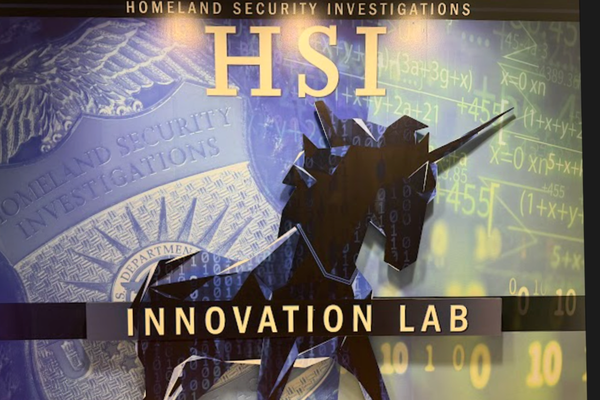
I was given the unique opportunity to take exclusive tours of multiple government and security sites to speak directly with security professionals. During these tours, I was able to witness firsthand how cybersecurity operates at the national and international level.
I was able to visit the United States’ Security Innovation Lab. Throughout this visit, I was able to learn firsthand from government officials regarding how the government funds and establishes cyber-intelligence and cyber-counterintelligence technology.
We also toured the Homeland Security Investigations' (HSI) Technical Operations Center. During this visit, we learned how the government uses technology to track major crimes including wire-fraud, human trafficking, child exploitation, and more.
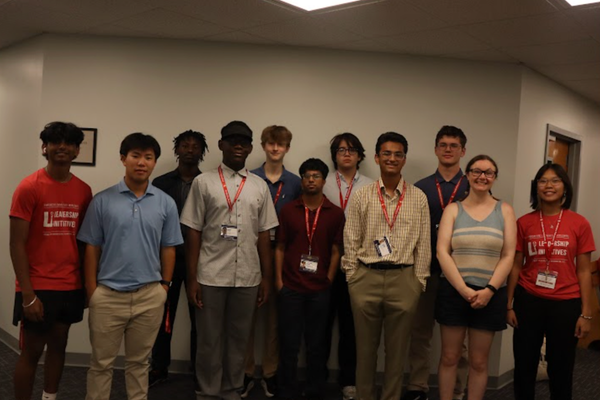
In order to apply the skills I learned throughout the internship, I worked directly with an organization based in the Washington, D.C. area, Immigrant and Refugee Outreach Center, to discuss their company's cybersecurity needs.
After three meetings where I walked through the organization model, protected information, and staff training of the nonprofit, I worked with my team to create a staff training protocol and threat analysis for my partner.
At the end of the internship, I advocated on behalf of, and received funding for, my organization partner to implement the cybersecurity training protocols so they can best protect their client information and continue to develop with a reduced fear of cyberattacks and cybersecurity threats.
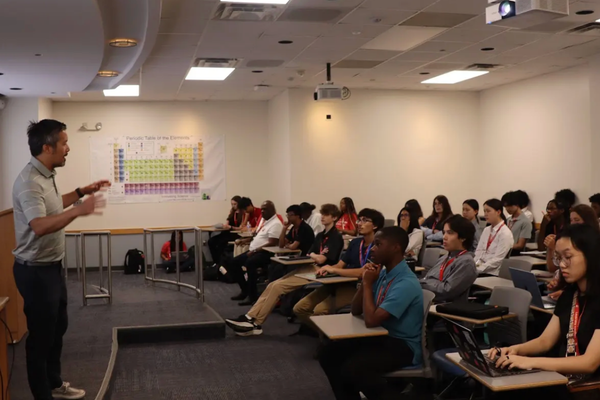
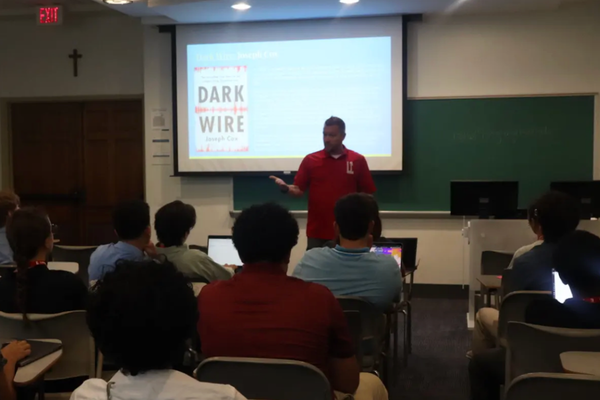
To learn more about the world of cybersecurity, I was given the unique opportunity to speak directly with cybersecurity experts from multiple organizations and backgrounds.
I worked directly with one of the leading consultants in Cyber Threat Management, and a lead Cyber Consultant from Ernst & Young, Phuong Nguyen, to learn about common threat assessment and cybersecurity counterintelligence. I also heard from the Director of Government Compliance for KPMG, Lisa Mathews, and a former Department of Justice Prosecutor, Brian Levine.
Throughout the internship, I also heard presentations from and spoke with representatives from the Department of Defense, Department of Homeland Security, and the National Security Agency. To learn the physical side of cybersecurity, we also had the unique opportunity to meet with globally recognized penetration testers and network threat assessors.
In order to put the skills we learned to the test, I had the unique opportunity to work with cybersecurity software typically used in graduate-level instructional courses. This provided me with a hands-on environment to develop and apply a wide range of cybersecurity skills.
I began with network cybersecurity, completing labs focused on network security and Linux to gain a deeper understanding of how networks communicate and where vulnerabilities may arise. This experience highlighted the ways in which cybersecurity threats can disrupt or compromise these communications, reinforcing the importance of proactive defense measures.
Building on these Linux skills, I participated in capture-the-flag coding competitions and explored virtual rooms designed to simulate real-world cybersecurity challenges. These activities tested both my technical abilities and problem-solving skills, allowing me to apply classroom concepts in practical, scenario-based settings.