

Diego Taborda

My Cybersecurity Training




Simply Management
Quick Facts
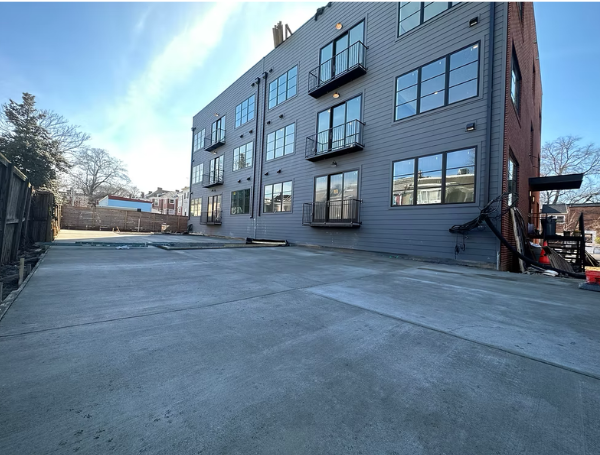
Simply Management is a local property management firm serving Washington, D.C. and Northern Virginia, owned and operated by Hannah Charles and Dylan Badawy. The company operates with a small team and manages nearly 150 residential units throughout the region.
The company provides full-service leasing and tenant vetting, helping property owners manage the process of finding and screening residents.
Simply Management also operates SimplyPro, which coordinates maintenance dispatching, and Simply Home Care, which focuses on property upkeep.
The company additionally manages complex real estate financial transactions and escrow disbursements, making financial administration an important component of its property management services.

Simply Management
About the Organization
Simply Management’s mission is to provide seamless, reliable, and high-quality property management services that make real estate ownership easier for landlords.
The company works to protect tenant comfort and property value while managing the day-to-day responsibilities associated with residential properties throughout the D.C. metropolitan area.
Its services extend across the property-management lifecycle, including leasing, tenant screening, maintenance coordination, property care, and financial transactions.
Simply Management emphasizes personalized and dependable service, with its small operational structure allowing the company to remain closely involved with the properties and clients it serves.

Simply Management
Community Involvement
Simply Management works directly with landlords, tenants, and licensed property managers throughout Washington, D.C. and Northern Virginia. Its partnerships with licensed property managers help support the safety and responsible management of tenants’ properties.
The company coordinates maintenance and property upkeep through SimplyPro and Simply Home Care, connecting residents and property owners with services needed to maintain residential units.
Simply Management is seeking to strengthen its community and client presence through a more personalized website, improved information about its properties and owners, and greater transparency for prospective clients.
The company also plans to expand its social media presence and advertising, allowing it to reach more property owners and prospective clients throughout the communities it serves.

Simply Management
Sources of Funding
Simply Management is a private property management business rather than a nonprofit, so the proposal does not identify charitable donations, foundation grants, or government grants as funding sources.
Its business model centers on providing property management services to landlords and managing residential properties, including leasing, maintenance, property upkeep, and financial transactions.
The proposal identifies continued business expansion and hiring as opportunities for growth, including potentially adding employees such as a social media director as the company expands.
The supplied proposal does not provide a detailed breakdown of Simply Management’s revenue streams or fee structure, so additional financial information would be required to identify its specific sources of operating revenue.
My Security Presentation
During the Cybersecurity & Defense Internship, I worked with Beth Cerrone and Jamie Kreider to learn the basics of cybersecurity and explore its practical applications.
Throughout the week, I worked with a nonprofit to develop cybersecurity solutions to protect against various cyber threats. I worked with my team to analyze the threats to the organization and then developed a comprehensive solution.
At the conclusion of this internship, our team pitched the final proposal to the Leadership Initiatives Grant Committee, earning a microgrant to support the implementation of our proposal.

My Security Proposal Presentation
Throughout the program, we also evaluated Simply Management’s internal cybersecurity infrastructure. The company already uses several important protections, including company-owned devices, Bitwarden password management, multi-factor authentication, and limited cybersecurity training.
We identified a consequential internal gap in email security and employee accountability. Staff members currently access a communal Gmail account, making it difficult to determine which employee is responsible for individual login activity. Additionally, MFA is connected primarily to a passkey on the owner’s smartphone, creating an operational vulnerability if that device is lost or compromised.
To address these vulnerabilities, we proposed an acceptable use policy, separate employee email accounts with a pooled inbox, a secondary authentication device, and recurring cybersecurity awareness training. Through Google Workspace, employees would receive individual accounts and role-based access while retaining the convenience of shared communications. Together, these measures will improve accountability, strengthen access controls, reduce employee-related cybersecurity risks, and create a more resilient internal system for Simply Management.
Internship Highlights

I was given the unique opportunity to take exclusive tours of multiple government and security sites to speak directly with security professionals. During these tours, I was able to witness firsthand how cybersecurity operates at the national and international level.
I was able to visit the United States’ Security Innovation Lab. Throughout this visit, I was able to learn firsthand from government officials regarding how the government funds and establishes cyber-intelligence and cyber-counterintelligence technology.
We also toured the Homeland Security Investigations' (HSI) Technical Operations Center. During this visit, we learned how the government uses technology to track major crimes including wire-fraud, human trafficking, child exploitation, and more.
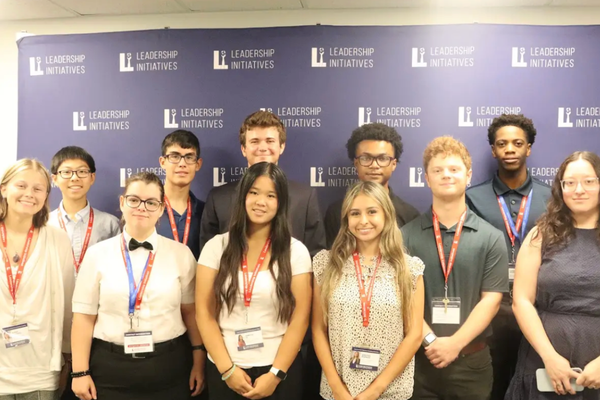
In order to apply the skills I learned throughout the internship, I worked directly with an organization based in the Washington, D.C. area, Knope, to discuss their company's cybersecurity needs.
After three meetings where I walked through the organization model, protected information, and staff training of the nonprofit, I worked with my team to create a staff training protocol and threat analysis for my partner.
At the end of the internship, I advocated on behalf of, and received funding for, my organization partner to implement the cybersecurity training protocols so they can best protect their client information and continue to develop with a reduced fear of cyberattacks and cybersecurity threats.

To learn more about the world of cybersecurity, I was given the unique opportunity to speak directly with cybersecurity experts from multiple organizations and backgrounds.
I worked directly with one of the leading consultants in Cyber Threat Management, and a lead Cyber Consultant from Ernst & Young, Phuong Nguyen, to learn about common threat assessment and cybersecurity counterintelligence. I also heard from the Director of Government Compliance for KPMG, Lisa Mathews, and a former Department of Justice Prosecutor, Brian Levine.
Throughout the internship, I also heard presentations from and spoke with representatives from the Department of Defense, Department of Homeland Security, and the National Security Agency. To learn the physical side of cybersecurity, we also had the unique opportunity to meet with globally recognized penetration testers and network threat assessors.
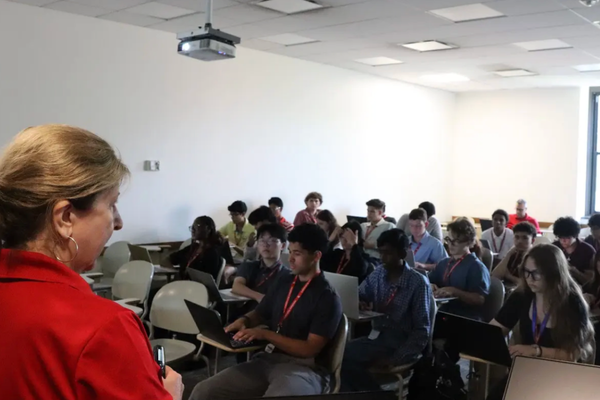
In order to put the skills we learned to the test, I had the unique opportunity to work with cybersecurity software typically used in graduate-level instructional courses. This provided me with a hands-on environment to develop and apply a wide range of cybersecurity skills.
I began with network cybersecurity, completing labs focused on network security and Linux to gain a deeper understanding of how networks communicate and where vulnerabilities may arise. This experience highlighted the ways in which cybersecurity threats can disrupt or compromise these communications, reinforcing the importance of proactive defense measures.
Building on these Linux skills, I participated in capture-the-flag coding competitions and explored virtual rooms designed to simulate real-world cybersecurity challenges. These activities tested both my technical abilities and problem-solving skills, allowing me to apply classroom concepts in practical, scenario-based settings.