

Max Vico

My Cybersecurity Training




LYNK Construction
Quick Facts
LYNK Construction is a family-owned construction company serving Washington, DC, Maryland, and Virginia with residential development and renovation services.
The company specializes in condominium conversions, apartment renovations, custom homes, and new construction projects that emphasize quality craftsmanship and modern design.
Its mission is to deliver exceptional construction services through transparency, communication, and client-focused project management.
By combining technical expertise with personalized service, LYNK Construction creates functional, high-quality spaces while building long-term relationships with its clients.

LYNK Construction
About the Organization
LYNK Construction is dedicated to transforming residential properties through high-quality construction, renovation, and development services tailored to each client's vision.
Through careful planning, budget management, permitting, and construction oversight, the company delivers projects that balance functionality, efficiency, and modern design. LYNK Construction emphasizes open communication and personalized solutions throughout every phase of development.
By prioritizing craftsmanship, integrity, and customer satisfaction, the company helps homeowners, developers, and investors create lasting value through successful residential construction projects.
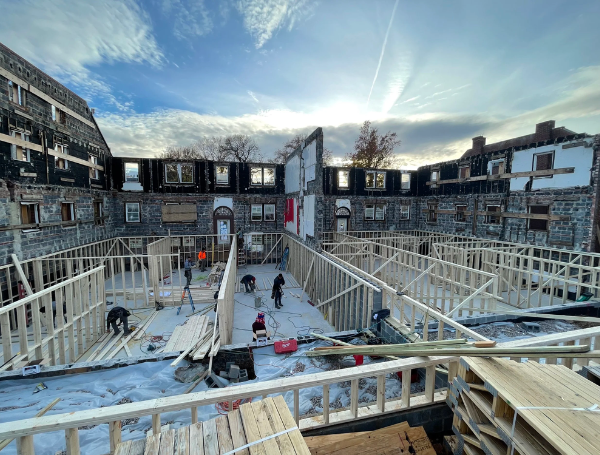
LYNK Construction
Community Involvement
LYNK Construction works closely with homeowners, real estate developers, architects, engineers, subcontractors, and suppliers to complete residential construction projects. The company values collaboration and transparent communication throughout every stage of development.
The organization also partners with local permitting agencies, design professionals, and construction specialists to ensure projects meet regulatory requirements while maintaining high-quality standards. These partnerships support efficient project delivery and long-term client satisfaction.
Through continued collaboration with clients and industry professionals, LYNK Construction contributes to neighborhood revitalization and the development of modern residential communities throughout the Washington metropolitan region.

LYNK Construction
Sources of Funding
LYNK Construction generates revenue through residential construction, condominium conversions, apartment renovations, custom home construction, and project management services provided to homeowners and real estate developers.
The company works with private clients, investors, and property developers who contract its services for new construction, renovations, budgeting, permitting, and construction management projects.
Revenue supports skilled labor, project management, equipment, permitting, subcontractor coordination, and continued investment in delivering high-quality construction services throughout the Washington metropolitan area.
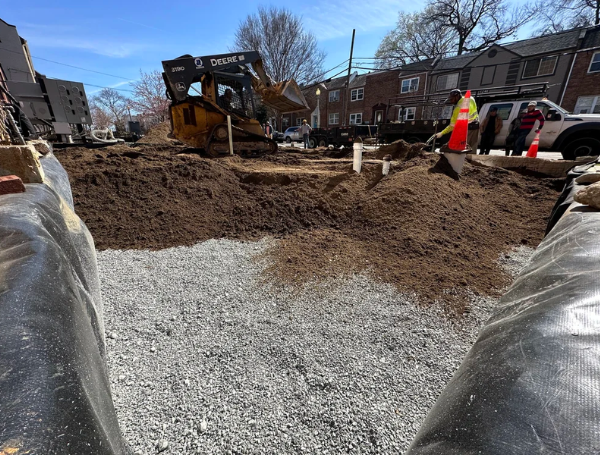
My Security Presentation
During the Cybersecurity & Defense Internship, I worked with Beth Cerrone and Jamie Kreider to learn the basics of cybersecurity and explore its practical applications.
Throughout the week, I worked with a nonprofit to develop cybersecurity solutions to protect against various cyber threats. I worked with my team to analyze the threats to the organization and then developed a comprehensive solution.
At the conclusion of this internship, our team pitched the final proposal to the Leadership Initiatives Grant Committee, earning a microgrant to support the implementation of our proposal.

My Security Proposal Presentation
Throughout the program, we also examined LYNK Construction’s internal cybersecurity infrastructure to determine how the company could better protect contracts, financial records, subcontractor information, and other proprietary data. Our analysis identified several vulnerabilities, including reused passwords, unsecured document storage, sensitive information transmitted through personal email, and the absence of a comprehensive backup system.
We identified a consequential internal gap in LYNK’s storage, access-control, and data-recovery systems. Financial and subcontractor information is particularly sensitive, and the proposal notes that the company currently lacks a backup system capable of protecting contracts, financial records, and project history if a device is lost, stolen, damaged, or compromised.
To address these vulnerabilities, we proposed a centralized Network-Attached Storage (NAS) system with role-based access controls, secure backups, VPN access, and stronger administrator authentication. The NAS would separate internal records from externally shared documents and restrict each employee or subcontractor to the information necessary for their role. The phased implementation would also incorporate mirrored drives, automatic snapshots, encrypted off-site backups, physical FIDO2 security keys, and additional segmentation and malware protections as LYNK expands its cybersecurity infrastructure.
Internship Highlights
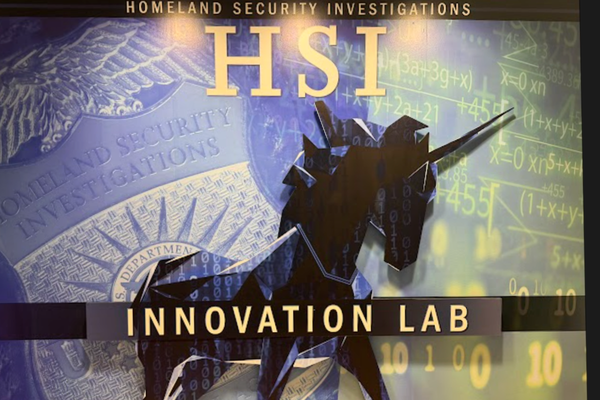
I was given the unique opportunity to take exclusive tours of multiple government and security sites to speak directly with security professionals. During these tours, I was able to witness firsthand how cybersecurity operates at the national and international level.
I was able to visit the United States’ Security Innovation Lab. Throughout this visit, I was able to learn firsthand from government officials regarding how the government funds and establishes cyber-intelligence and cyber-counterintelligence technology.
We also toured the Homeland Security Investigations' (HSI) Technical Operations Center. During this visit, we learned how the government uses technology to track major crimes including wire-fraud, human trafficking, child exploitation, and more.
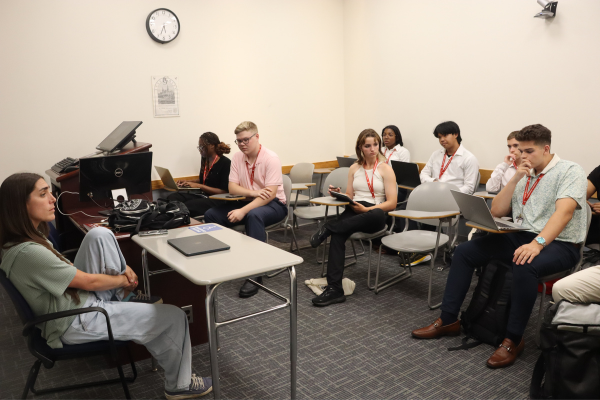
In order to apply the skills I learned throughout the internship, I worked directly with an organization based in the Washington, D.C. area, Knope, to discuss their company's cybersecurity needs.
After three meetings where I walked through the organization model, protected information, and staff training of the nonprofit, I worked with my team to create a staff training protocol and threat analysis for my partner.
At the end of the internship, I advocated on behalf of, and received funding for, my organization partner to implement the cybersecurity training protocols so they can best protect their client information and continue to develop with a reduced fear of cyberattacks and cybersecurity threats.

To learn more about the world of cybersecurity, I was given the unique opportunity to speak directly with cybersecurity experts from multiple organizations and backgrounds.
I worked directly with one of the leading consultants in Cyber Threat Management, and a lead Cyber Consultant from Ernst & Young, Phuong Nguyen, to learn about common threat assessment and cybersecurity counterintelligence. I also heard from the Director of Government Compliance for KPMG, Lisa Mathews, and a former Department of Justice Prosecutor, Brian Levine.
Throughout the internship, I also heard presentations from and spoke with representatives from the Department of Defense, Department of Homeland Security, and the National Security Agency. To learn the physical side of cybersecurity, we also had the unique opportunity to meet with globally recognized penetration testers and network threat assessors.
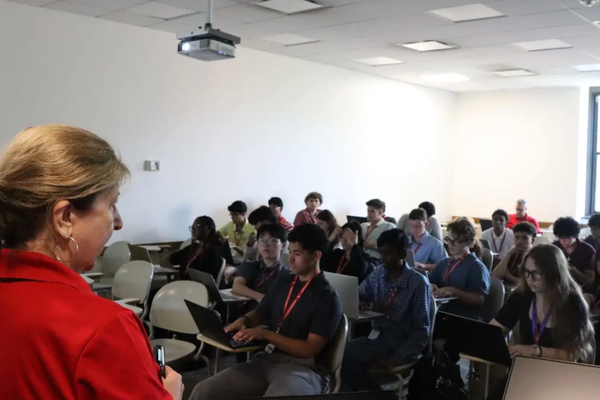
In order to put the skills we learned to the test, I had the unique opportunity to work with cybersecurity software typically used in graduate-level instructional courses. This provided me with a hands-on environment to develop and apply a wide range of cybersecurity skills.
I began with network cybersecurity, completing labs focused on network security and Linux to gain a deeper understanding of how networks communicate and where vulnerabilities may arise. This experience highlighted the ways in which cybersecurity threats can disrupt or compromise these communications, reinforcing the importance of proactive defense measures.
Building on these Linux skills, I participated in capture-the-flag coding competitions and explored virtual rooms designed to simulate real-world cybersecurity challenges. These activities tested both my technical abilities and problem-solving skills, allowing me to apply classroom concepts in practical, scenario-based settings.