

Charlotte Henderson

My Cybersecurity Training




Peace of Mind
Quick Facts
Peace of Mind is a nonprofit organization dedicated to helping children develop mindfulness, emotional regulation, conflict resolution, and social-emotional learning skills.
The organization provides research-supported curriculum, storybooks, educator training, and classroom resources for students from Pre-K through eighth grade.
Its mission is to equip children with the skills to manage emotions, build healthy relationships, and become compassionate leaders within their communities.
By combining mindfulness, brain science, and social justice education, Peace of Mind helps create healthier, more inclusive school environments where students and educators can thrive.

Peace of Mind
About the Organization
Peace of Mind is committed to improving student well-being by integrating mindfulness, social-emotional learning, and conflict resolution into classrooms across the United States.
Through educator training, classroom curriculum, professional development, and family resources, the organization empowers teachers to create supportive learning environments that strengthen emotional resilience and positive relationships. Peace of Mind also provides ongoing guidance to schools implementing its programs.
By fostering kindness, compassion, and self-awareness, the organization prepares students to overcome challenges, resolve conflicts peacefully, and contribute positively to their schools and communities.

Peace of Mind
Community Involvement
Peace of Mind works closely with classroom teachers, counselors, social workers, school administrators, and volunteers to deliver mindfulness-based social-emotional learning programs. The organization also provides professional training, conferences, and communities of practice that support educators throughout implementation.
The organization partners with public, public charter, and independent schools, along with educational leaders, researchers, and community organizations to expand access to its curriculum. These collaborations strengthen school culture and improve student well-being nationwide.
Through ongoing educator engagement and community partnerships, Peace of Mind continues to promote safe, compassionate, and inclusive learning environments for thousands of students each year.

Peace of Mind
Sources of Funding
Peace of Mind is funded through individual donations, foundation grants, financial contributions, in-kind donations, volunteer support, and community fundraising efforts that advance its educational mission.
The organization also receives support from charitable foundations, individual donors, and community partners who contribute funding, expertise, materials, and volunteer service to expand its programs and educator resources.
Funding is used to develop curriculum, train educators, provide grants for schools, expand student resources, and increase access to mindfulness-based social-emotional learning programs across diverse school communities.

My Security Presentation
During the Cybersecurity & Defense Internship, I worked with Beth Cerrone and Jamie Kreider to learn the basics of cybersecurity and explore its practical applications.
Throughout the week, I worked with a nonprofit to develop cybersecurity solutions to protect against various cyber threats. I worked with my team to analyze the threats to the organization and then developed a comprehensive solution.
At the conclusion of this internship, our team pitched the final proposal to the Leadership Initiatives Grant Committee, earning a microgrant to support the implementation of our proposal.

My Security Proposal Presentation
Throughout the program, we worked closely with Peace of Mind to understand how the organization interacts with customers, schools, educators, and donors through its digital platforms. These meetings provided valuable insight into vulnerabilities surrounding customer and donor information, online payment systems, website administration, and the protection of Peace of Mind’s proprietary educational curriculum.
The most pressing customer-facing issue is the potential exposure of sensitive information through compromised accounts and insufficiently protected digital platforms. Peace of Mind processes payments through PayPal and Stripe, maintains curriculum materials through Padlet, and has experienced persistent phishing attempts. These vulnerabilities could expose customer information while also placing the organization’s educational materials and reputation at risk.
To address these concerns, we proposed implementing multi-factor authentication through Cisco Duo for administrative accounts and strengthening authentication for payment platforms. We also recommend recurring phishing-awareness training to help employees identify increasingly sophisticated attacks. Additionally, Peace of Mind should transition curriculum materials from Padlet to protected PDFs secured through DRM-X 5.0, limiting unauthorized copying, recording, or distribution. Finally, organizational email addresses should be monitored through Have I Been Pwned to identify known or future data breaches. Together, these measures create multiple layers of protection for customer information, financial transactions, and Peace of Mind’s intellectual property.
Internship Highlights

I was given the unique opportunity to take exclusive tours of multiple government and security sites to speak directly with security professionals. During these tours, I was able to witness firsthand how cybersecurity operates at the national and international level.
I was able to visit the United States’ Security Innovation Lab. Throughout this visit, I was able to learn firsthand from government officials regarding how the government funds and establishes cyber-intelligence and cyber-counterintelligence technology.
We also toured the Homeland Security Investigations' (HSI) Technical Operations Center. During this visit, we learned how the government uses technology to track major crimes including wire-fraud, human trafficking, child exploitation, and more.
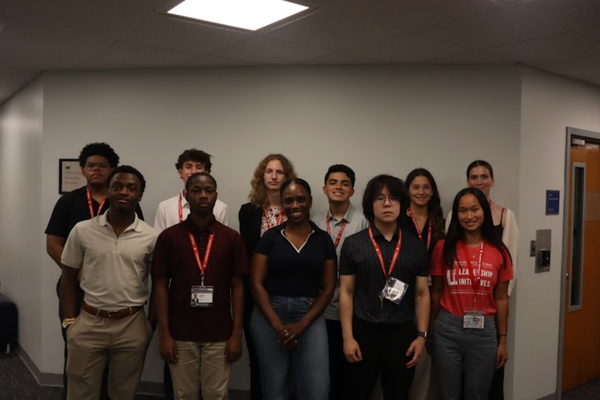
In order to apply the skills I learned throughout the internship, I worked directly with an organization based in the Washington, D.C. area, Peace of Mind, to discuss their company's cybersecurity needs.
After three meetings where I walked through the organization model, protected information, and staff training of the nonprofit, I worked with my team to create a staff training protocol and threat analysis for my partner.
At the end of the internship, I advocated on behalf of, and received funding for, my organization partner to implement the cybersecurity training protocols so they can best protect their client information and continue to develop with a reduced fear of cyberattacks and cybersecurity threats.
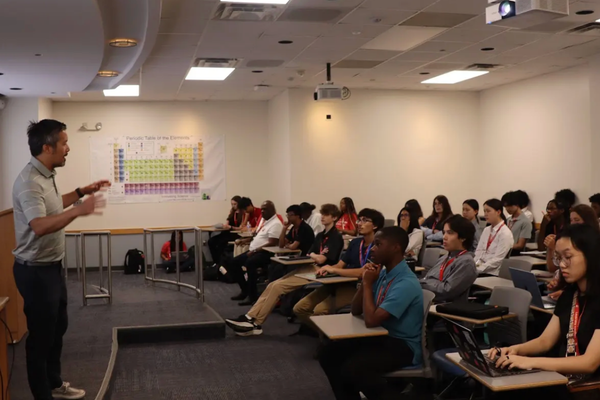
To learn more about the world of cybersecurity, I was given the unique opportunity to speak directly with cybersecurity experts from multiple organizations and backgrounds.
I worked directly with one of the leading consultants in Cyber Threat Management, and a lead Cyber Consultant from Ernst & Young, Phuong Nguyen, to learn about common threat assessment and cybersecurity counterintelligence. I also heard from the Director of Government Compliance for KPMG, Lisa Mathews, and a former Department of Justice Prosecutor, Brian Levine.
Throughout the internship, I also heard presentations from and spoke with representatives from the Department of Defense, Department of Homeland Security, and the National Security Agency. To learn the physical side of cybersecurity, we also had the unique opportunity to meet with globally recognized penetration testers and network threat assessors.
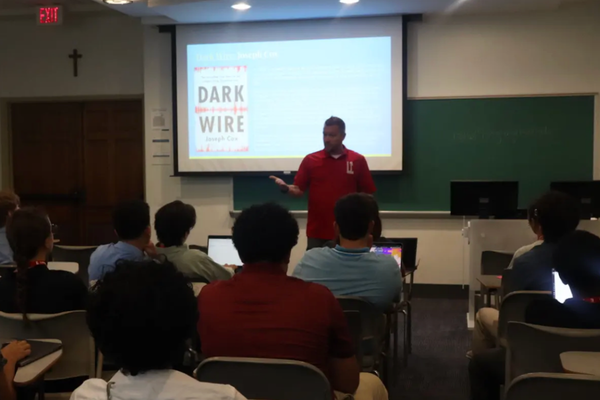
In order to put the skills we learned to the test, I had the unique opportunity to work with cybersecurity software typically used in graduate-level instructional courses. This provided me with a hands-on environment to develop and apply a wide range of cybersecurity skills.
I began with network cybersecurity, completing labs focused on network security and Linux to gain a deeper understanding of how networks communicate and where vulnerabilities may arise. This experience highlighted the ways in which cybersecurity threats can disrupt or compromise these communications, reinforcing the importance of proactive defense measures.
Building on these Linux skills, I participated in capture-the-flag coding competitions and explored virtual rooms designed to simulate real-world cybersecurity challenges. These activities tested both my technical abilities and problem-solving skills, allowing me to apply classroom concepts in practical, scenario-based settings.