Khanikka-Gupta

Khanikka Gupta



My Ethical Investigation Research
My research analysis explored the necessary questions and implications to consider while pursuing research about AI-supported neurocognitive screening of political candidates for mild cognitive impairment and its future applications. It highlights key ethical considerations that must be addressed to ensure the responsible development and use.
In order to answer this question, I reviewed the literature to make informed conclusions about the current status and stances of mandatory cognitive screening for political candidates. I then devised a guide and framework to recommend with the aim of ensuring that a thorough, holistic ethical review of AI-supported cognitive and neurological screening protocols is conducted as its findings progress.
Our analysis suggests that AI-supported neurocognitive screening of political candidates will have several implications that should be anticipated and addressed. The proposed protocol combines computerized cognitive testing, AI-based normative modeling and adaptive testing, EEG, MRI, PET scans, and blood-based biomarkers to identify potential signs of cognitive decline. However, the paper emphasizes significant ethical tensions involving medical privacy, ageism, neurodiversity, political weaponization, democratic authority, false results, and the potential transfer of decision-making power from voters to medical experts. The analysis ultimately argues that screening could be ethically justified only with strict safeguards, transparent oversight, and protections against political misuse.
My Neuroscience Presentation
Throughout the Advanced Medical Neuroscience Internship, I worked directly with some of the world’s leading scientists to learn about neuroethics, neurocognitive health, and revolutionary developments in the field.
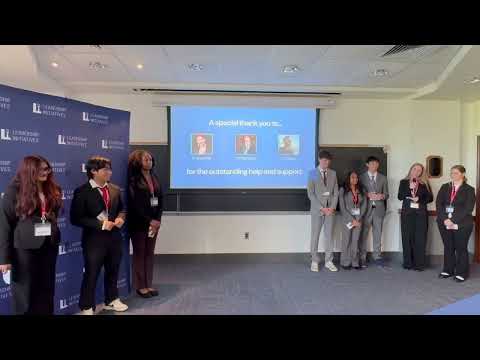
At the conclusion of the internship, I presented my research to an esteemed panel of judges, including Dr. James Giordano, Chief of Georgetown University’s Neuroethics Studies Program, and Dr. Rachel Wurzman, faculty with the Pellegrino Center for Clinical Bioethics at Georgetown University.
In order to address the discourse and illuminate the ethical considerations while reviewing the research about using psilocybin-induced neuroplasticity as an adjunct therapy to reduce brain-computer interface illiteracy, it is essential to critically examine the methodologies, biases, and implications involved through their feedback.
The Frontier Of Neuroscience
Center For Functional And Molecular Imaging
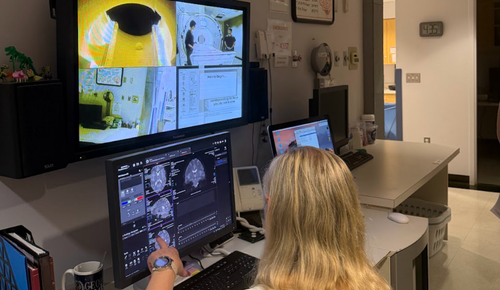
The Center for Functional and Molecular Imaging (CFMI) at Georgetown is one of the world’s leading institutions with expertise in structural, functional, and brain imaging.
While visiting the CFMI, I met Dr. Ashley VanMeter, Director of the Neuroimaging Corps at Georgetown University, who described to me the rationale, protocols, capabilities, and limitations of functional magnetic resonance imaging for clinical and basic science applications.
I not only learned about the science behind fMRI, but also had the opportunity to see a machine that possesses a magnetic power of 30,000 times the strength of Earth’s magnetic field.
Neuromodulation
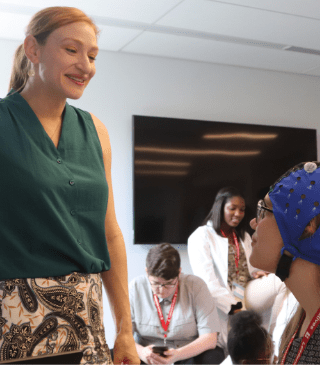
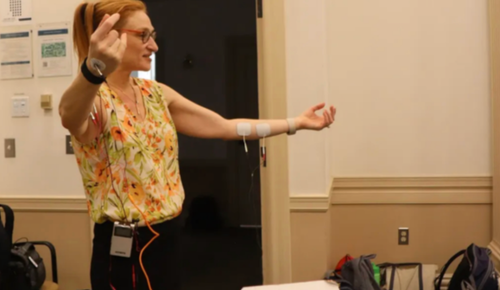
Dr. Adam Green's Lab for Relational Cognition at Georgetown University introduced the potential of neuromodulation, which targets specific neurological sites using electrical or chemical stimulation to treat various conditions.
I gained insight into transcranial direct current stimulation (tDCS) and explored consumer neuromodulation devices that apply electrical currents through headsets or electrode bands.
In a hands-on activity, we used electrical signals from my muscle to activate another intern’s muscle, allowing us to control each other’s arm movements. This demonstrated the real-world impact and possibilities of neuromodulation technology.
Internship Highlights
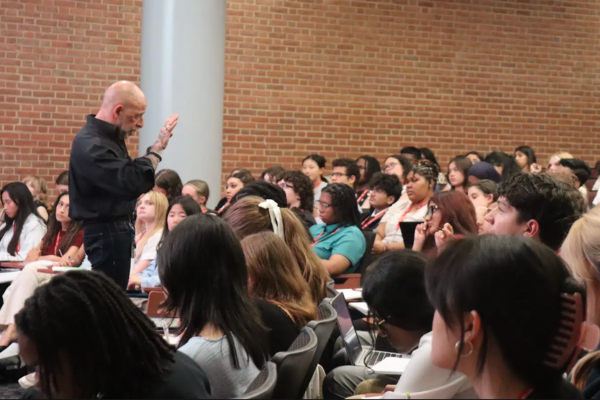
I had the honor to work and collaborate directly with Dr. James Giordano, Chief of Georgetown University’s Neuroethics Studies Program.
In addition to his involvement with a variety of educational institutions, Dr. Giordano is the author of over 350 publications in neuroscience and neuroethics.
During our first meeting, Dr. Giordano guided us through an exploration of our own brains, minds, and selves, probing for the problems, meanings, and questions within the world that surrounds us.
In subsequent meetings, Dr. Giordano frequently prompted both introspection and extrospection to encourage familiarity with our own minds, as well as our environment, and how the two can interact to our benefit.
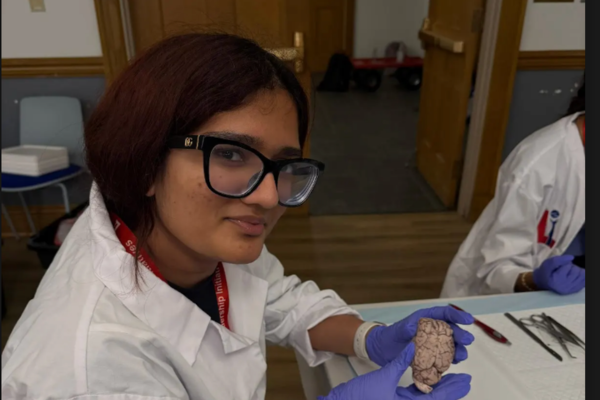
I had the unique opportunity to participate in a hands-on brain dissection alongside Professor Tatyana Kliorina, gaining a deeper understanding of the structures and systems that make up the human brain.
Throughout the dissection, I explored the anatomy of the brain and learned how different regions work together to control movement, behavior, memory, sensory processing, and other essential functions.
The experience allowed me to identify major anatomical structures and better understand how their location and organization contribute to neurological function. Seeing these structures firsthand helped connect concepts from neuroscience and anatomy to their real-world medical applications.
This hands-on experience strengthened my understanding of neuroanatomy and demonstrated how studying the physical structure of the brain can help researchers and medical professionals better understand neurological conditions, brain function, and potential treatments.
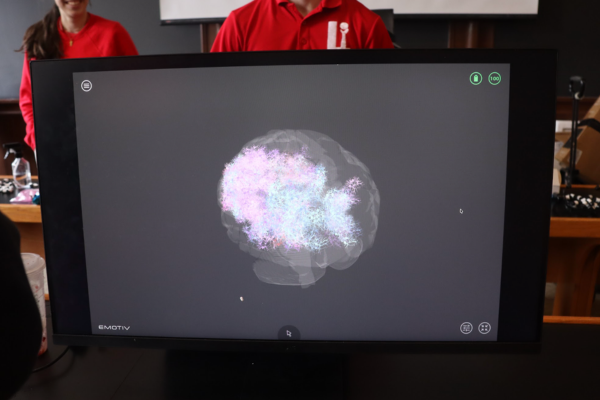
I had the unique opportunity to learn from Dr. Adam Green, a cognitive neuroscientist, Professor of Psychology at Georgetown University, and founder of the Society for the Neuroscience of Creativity.
Dr. Green directs Georgetown's Laboratory for Relational Cognition, which studies relational thinking- how the human brain makes connections between seemingly unrelated ideas and generates new, creative ones.
A central insight of his work is that creativity is not only a trait but also a state, meaning the same person can be more or less creative depending on the moment, the task, and how much effort they choose to put in.
Dr. Green led us through his use of transcranial direct current stimulation (tDCS), in which a safe electrical current is delivered via electrodes placed on the forehead to the frontopolar cortex, a region at the front of the brain associated with creative thinking. I got to experience this firsthand, undergoing the stimulation myself to see how it feels to have the brain's creative response observed and even boosted in real time.
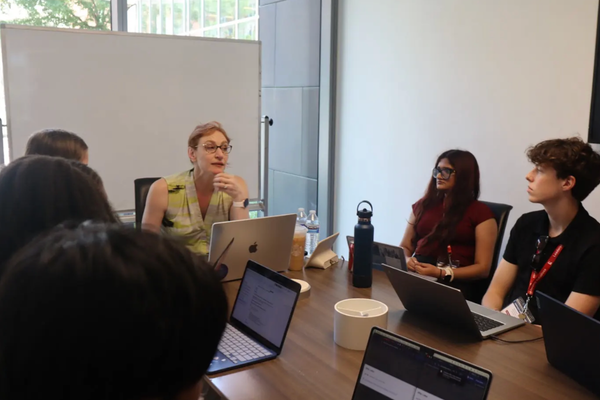
Along with Dr. Giordano, I had the opportunity to work closely with Dr. Rachel Wurzman, a Dana Foundation Fellow in Neuroscience and Society.
Dr. Wurzman encouraged us to think critically about the questions that help drive science forward and improve our understanding of the world around us through a biopsychosocial lens. She also lent her expertise in neuroplasticity, neurodiversity, and neuroethics to help our team develop our research proposal.
In addition to our work with Dr. Wurzman, we had the opportunity to meet with a variety of neuroscientists with a variety of unique specialties.
One such professional was Dr. Fernando Pagan, a Georgetown Neurologist and the Director of Movement Disorders, who is a nationally recognized leader in Parkinson’s Disease treatment. We were able to learn about Movement Disorders from various perspectives as Dr. Pagan was joined by Captain Rick Schena, who lives with Parkinson’s and explains how his treatment plan allows him to continue living life to the fullest.